There are no items in your cart
Add More
Add More
| Item Details | Price | ||
|---|---|---|---|

Artificial Intelligence (AI) is transforming the way human resource (HR) leaders and professionals recruit, manage, and develop people. AI technologies are reshaping every aspect of the employee life cycle, including AI-powered resume screening and sentiment analysis of employee survey data. HR leaders are increasingly implementing AI tools to streamline HR processes and improve decision-making effectiveness.
As AI systems become integral to human resource management, HR professionals must evolve and upskill themselves. To successfully navigate the transition to AI-powered HR systems, HR professionals must develop essential skills that combine ethical and responsible use of AI with a human-centered approach.
The AHEAD Framework: Future-Ready Skills for HR Professionals
The integration of AI in HR highlights the need for essential skills that enable HR professionals to adapt to emerging technologies and processes. The future of AI in HR emphasizes augmentation, where AI enhances rather than replaces human judgment. To succeed in an AI-driven environment, HR professionals must balance technological proficiency with human understanding. Building on established leadership, data analytics, and ethical technology adoption frameworks, the article introduces the AHEAD framework, a future-ready skills model tailored for HR professionals navigating the AI era.
1. AI literacy
As organizations increasingly adopt AI tools and technologies, HR practitioners must develop data literacy, including foundational knowledge of computational and statistical principles. This also means understanding what AI can realistically do, how it does it, and what might be the limitations. While HR professionals are not required to become data scientists, they must possess a basic understanding of how AI tools work and how to use them effectively.
AI literacy ensures that HR leaders are active users of technology, playing a critical role in its adoption and application, with a solid understanding of how AI systems function, HR professionals can make informed choices about which tools to adopt, how to integrate them with existing processes, and how to ensure that they align with organizational values and goals. This involves understanding the different types of AI such as generative AI, and developing practical skills, such as effective prompting.
AI literacy enables HR professionals to ask the right questions to vendors, collaborate effectively with data scientists and IT teams. By understanding AI, HR leaders can become champions of responsible AI adoption with the intent that technology enhances human decision-making rather than replacing it.
2. Human-Centered Leadership
As organizations adopt different AI technologies, HR leaders and managers must acknowledge the need to be more human-centric than ever before. Social skills such as communication, empathy, coaching, and active listening are crucial given the growing dependence on AI tools. With the transition towards AI-enabled HR processes, employees will have concerns and apprehensions. HR leaders and managers need to approach this transition with compassion and trust.
Effective and clear communication can enable employees to share their ideas and concerns with colleagues and other stakeholders effectively. Using AI systems may be complex at first; hence, clear communication can ensure everyone is on the same page.
Adoption of AI systems also requires trust building. Employees need to be able to trust that the technology is reliable. For instance, if an organization is implementing an AI-powered performance management system, it must ensure that all the stakeholders clearly understand the implications for goal-setting, performance feedback and evaluations. This includes aligning managers and employees on how AI-generated insights will be used, clarifying whether the system provides recommendations or final decisions, and ensuring that feedback remains constructive and human-centered. Moreover, HR leaders also need to define protocols for addressing inaccuracies, biases or disputes that may arise from algorithmic outcomes, thereby building trust and accountability in the system
3. Ethical Judgement
One of the greatest challenges of AI adoption is the risk of reinforcing existing biases. If historical data is biased, the likelihood of AI outputs reinforcing the errors is high whether it is in hiring, performance ratings or promotions. HR leaders have a central role to play in ensuring fairness and inclusivity in the use of AI tools.
Training data bias - historical or systemic biases embedded in the datasets used to train an AI model, can lead to serious implications for HR decision making. If left unchecked, these biases may lead to inaccurate outputs that reinforce existing inequalities, such as ignoring candidates from minority groups or underrepresenting certain skills and experiences in talent pipelines. This not only undermines the organization’s diversity and inclusion objectives but also risks reputational damage and loss of employee trust.
Moreover, since AI-powered HR systems often rely on sensitive employee data, HR leaders must develop the skills to safeguard privacy and confidentiality. This also means setting clear boundaries on what data is collected, ensuring compliance with data regulation and being transparent with employees on how their data is being used. HR leaders will need to develop a strategic mindset to ensure optimal use of AI systems that are built on fairness, transparency and accountability.
4. Analytical Thinking
HR practitioners increasingly require analytical skills to interpret and make sense of AI-generated insights and connect them to organizational needs. Analytical competencies are extremely critical when examining workforce patterns, predicting future hiring needs or identifying performance and engagement gaps. It is not enough to simply access dashboards or reports. HR professionals must be able to evaluate and understand insights generated by AI models critically. This means going beyond surface-level metrics to understand the assumptions behind the algorithms, the quality of the data being used and potential biases that may influence outcomes.
HR professionals need to develop analytical skills to question whether the AI-generated insights are accurate, relevant and actionable within their organizational context. This also means the ability to distinguish between noise and data, translate data into meaningful narratives and make evidence-based decisions that positively impact both employee and organizational success.
5. Design of Employee Experience
HR practitioners must develop the competencies to leverage AI technologies to personalize learning, career development and employee engagement. When combined with a design - thinking mindset this means approaching HR challenges with empathy, experimentation and iteration to ensure that AI-driven solutions are aligned with organizational requirements.
By leveraging AI-driven insights, HR managers can design tailored learning paths that adapt to an employee’s unique strengths and aspirations. In career development, AI insights can help recommend growth opportunities, internal mobility options, and mentorship assignments that align with an individual’s long-term goals. Similarly, in employee engagement, HR professionals need to develop skills to leverage predictive analytics and sentiment analysis to understand employee engagement patterns and recommend timely interventions.
By combining design thinking with AI competencies, HR professionals can create human-centered, adaptive and inclusive HR systems that not only drive productivity but also elevate employee experiences.
The AHEAD framework offers HR professionals a roadmap to stay future-ready in the age of AI. By embracing these skills, HR professionals can move beyond adaptation to shaping the future of work its
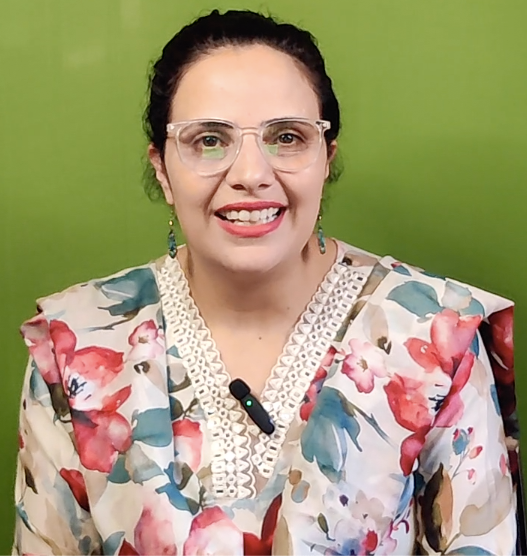
Dr Romana Gulshani
Dr. Romana Gulshani is an HR academic and consultant specializing in helping startups and professionals leverage people management and AI for growth.
 Launch your Graphy